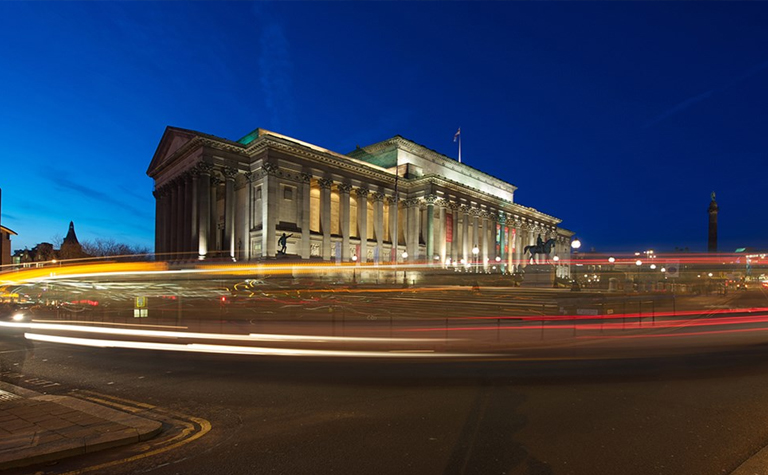
Liverpool has continued to grow in popularity for residents, visitors, and investors alike. With this continued focus, many areas of the city centre have been adapted and, in some cases, transformed to allow for this continuous interest, with a variety of interesting architectural endeavours. It appears that the latest addition to these changes will be around the city’s ‘cultural quarter’, with plans to regenerate St George’s Gateway.
St George’s Gateway is particularly significant to the city for several reasons as the location of key cultural buildings such as the Walker Art Gallery, World Museum, Central Library, Empire and the Empire Theatre, as well as some of the most iconic and famous buildings in the city such as St George’s Hall. It also includes Lime Street Station, making it key for tourists and locals alike from a transport perspective.
The area has also been hailed as ‘presenting one of Liverpool’s most significant regeneration opportunities with huge development potential to be unlocked due to the removal of the Churchill Way Flyovers.’ Therefore, Liverpool City Council has appointed a team of experts, to set out how this space can be regenerated and transformed over the next ten years.
Such long-term and ambitious plans mean great things for both current and future architecture jobs in the city, with industry-leading expertise needed to bring these ideas to life. The project will be led by LDA Design, alongside architectural practise Haworth Tompkins and PLACED, a Liverpool-based company who specialise in engaging communities on the built environment.
Director of LDA Design, Mark Graham, has stated that ‘St George’s has all the ingredients needed to create a world-class gateway for Liverpool. We are, therefore, very excited to be working with the Council to realise the potential of this historically and culturally significant area of Liverpool.’
The council have also partnered with Liverpool John Moore University and National Museums Liverpool to ensure ‘the development of a transformational future which is both visionary, ambitious, and deliverable.’ It has also been stated that a key focus of the masterplan is to ‘enhance connectivity, specifically to the wider city and adjoining communities set within the world class public realm.’
Liverpool City Council’s Cabinet Member for Growth and Development, Councillor Nick Small, states that ‘the future development of St George’s Gateway is a hugely critical part of our vision to the next phase in the regeneration of Liverpool city centre and how it connects to North Liverpool.’
Small also went on to highlight how ‘this project represents a unique opportunity to re-shape this key gateway and help the city to attract investors in creating a truly world-class experience to match the area’s unrivalled architecture and history. I’m delighted we’ve appointed a highly experienced and skilled team to lead on this piece of work and look forward to the engagement phase beginning to hear the views of our residents and businesses on this exciting chapter in the future of our city.’
Liverpool is continuing to evolve as a city, and the St George’s Gateway will be an exciting addition to these changes. This grand development will be a long-term investment over the next ten years, but it will be exciting to see how this all comes to fruition and the impact it will have on the wider city overall.