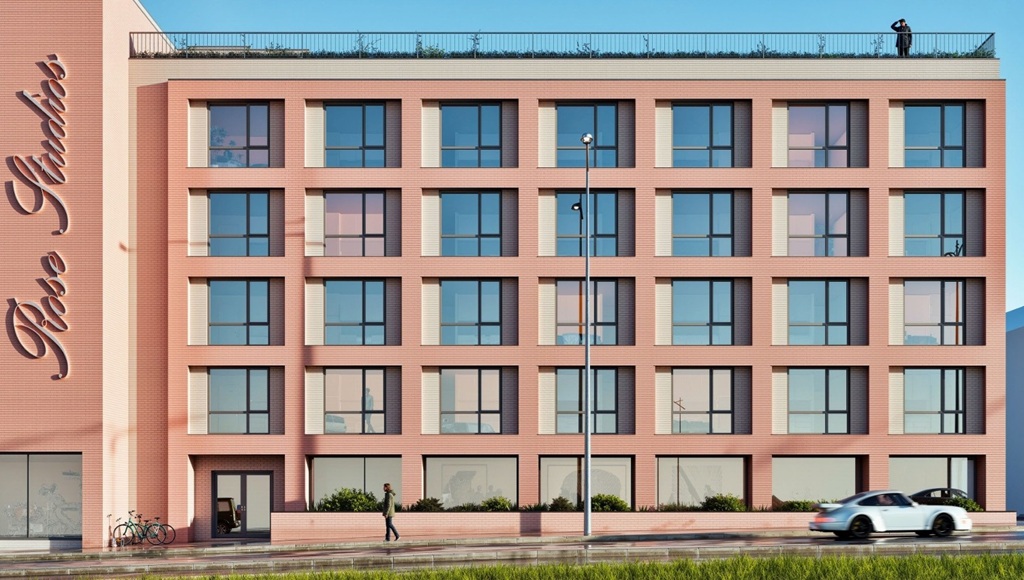
Liverpool has a sizeable student population thanks to the array of world-class educational institutions throughout the city. This means that there is a continuous demand for student housing in the city. To help to meet this demand, plans have been lodged with Liverpool City Council for the development of a former car wash-site, which sits to the east of the Pumpfields regeneration zone, on the outskirts of the city centre.
The proposals outline the ambition to produce 103 new studio apartments, with the design including linked buildings of varying heights, with between 5 and 6-storey structures. The proposal also includes residential features such as co-working spaces, bike storage, an onsite gym, a rooftop space, and landscaping around the buildings. The structure has been designed by Enhanced Architecture for SW Properties.
Enhanced Architecture have made the case that ‘currently the site represents a break in the continuity of the surrounding urban fabric, creating a noticeable fracture in the established grain of the area’, which the new structure would resolve, as Enhanced highlights that the area is moving from ‘low intensity industrial uses to residential, referencing schemes’.
Student accommodation is an important component of Liverpool’s architectural identity, and if the ‘Rose Studios’ project is approved, the scheme could assist with continuing to drive architecture jobs in Liverpool and property jobs in Liverpool as well.
In the planning statement, it confirms that ‘the client’s real estate and PBSA advisors believe that the investment in delivering the development will bring forward major economic and public benefits alongside the high quality student homes in an area that is geographically close to the campus of Liverpool University, Liverpool John Mooers University, and the Liverpool Royal Teaching Hospital and provides easy access with excellent public transport links to the City Centre.’
The statement also outlines the ‘ambition to regenerate an under-used urban site that lies within a prominent position front St Anne’s Street, in close proximity to the periphery of the City Centre.’
If the proposal receives approval, the goal would be for the scheme to be operational in time for student intake at the start of the academic year in September 2028. Student accommodation continues to a driving force in Liverpool’s architectural development, and it will be interesting to see the impact on this project in terms of the surrounding area and how it may continue to evolve from industrial to residential spaces.