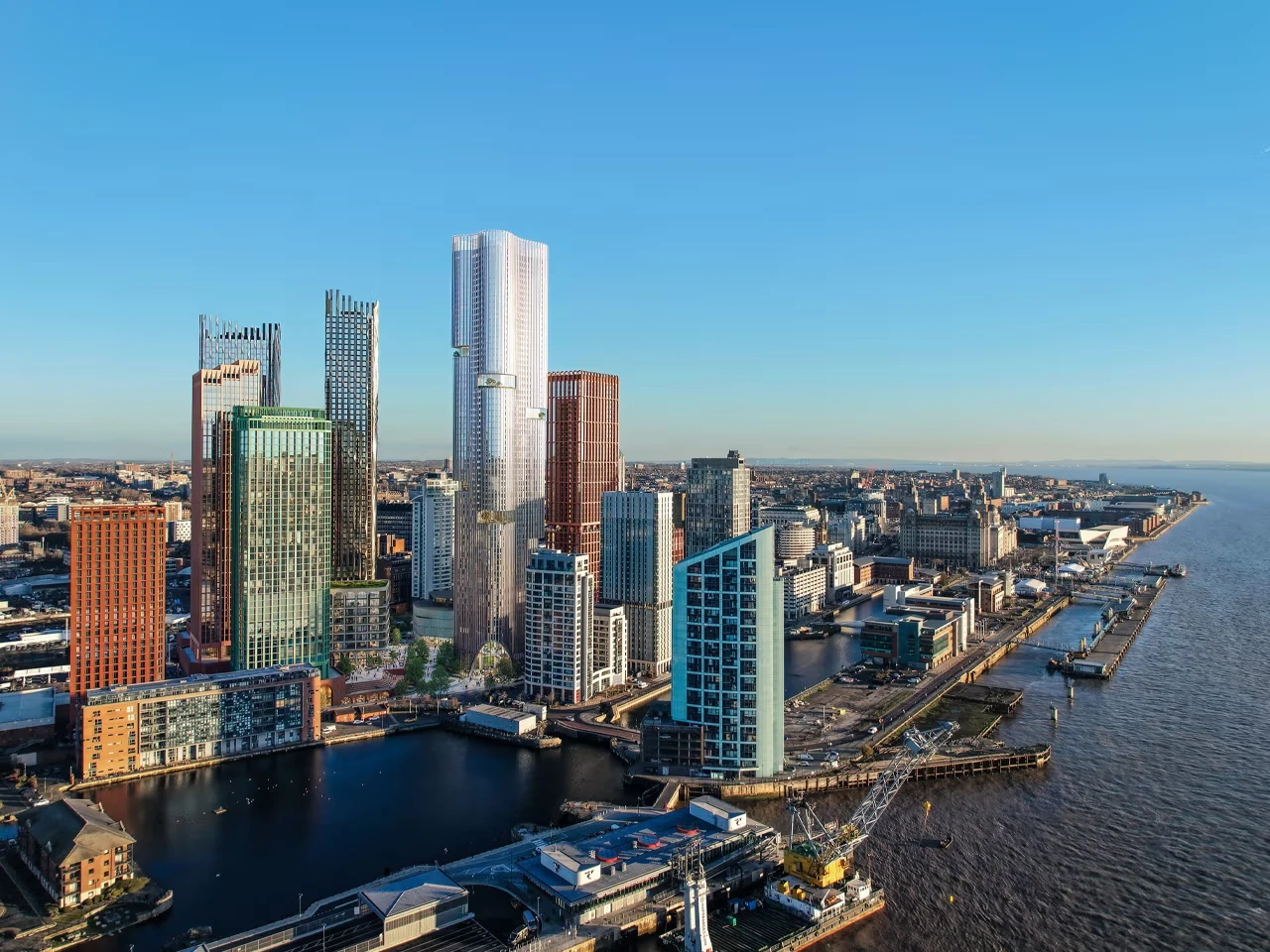
Liverpool’s skyline has continuously evolved over the past decade, with taller buildings being added consistently in the city centre, and in particular, around the waterfront. These larger scale buildings have been constructed to meet the rising demand for residential and commercial space, as more people look to live, work, and invest in the city. The latest addition to these ambitious projects comes in the form of plans that have been submitted for a 70-storey tower on the city’s waterfront. If approved, this would become the tallest building in Liverpool.
The skyscraper has been proposed by Davos Property Developments in partnership with Beetham Davos, with the architectural design being executed by the firm SimpsonHaugh. The building itself is set to serve as a premium-mixed use structure if approved, offering a five-star hotel as well as high-end residential properties. The current plan iterations outline that the hotel would occupy the lower portion of the building, taking up around 20-23 floors. The rest of the structure would make up the proposed 563 apartments as well as the proposed rooftop terrace, bars, restaurants, and gyms.
In terms of the building’s design, SimpsonHaugh stated that they have ‘drawn inspiration from Liverpool’s industrial and maritime heritage, creating a contemporary design that aims to feel rooted in Liverpool’s history while still reading as a bold, international statement.’ Founding Partner Ian Simpson highlights that ‘this is a landmark intervention for Britain’s most dramatic waterfront skyline.’
Developers are also referring to the proposals as the ‘centrepiece’ for the overarching £1 billion Kings project, which is set to completely transform Liverpool’s dockland area. Chairman of Beetham Davos, Hugh Frost, states that ‘this will be the scheme’s signature building and is the ultimate expression of our confidence in Liverpool and the council’s backing for our ambition.’
Frost also went on to highlight how ‘only last week it was confirmed that there will be 135 cruise ships visiting Liverpool during the 2026 season. This number will grow as the new cruise terminal is completed, with the landing stage extended to accommodate two ships at a time’ meaning that ‘demand for the hotel will be driven in part by cruise passengers seeking to start or finish their journeys in the same style and luxury offered on board.’
If this project goes ahead, this could mean both exciting things for architecture jobs in Liverpool as well as property jobs in Liverpool, especially considering that a structure of this scale has not yet been attempted in the city, demonstrating the expansion of the city’s architectural identity.
The hybrid application is set to go out to public consultation in the spring, and full planning submission is set to take place before the end of summer. If approved, this structure will act as an industry-defining building, taking Liverpool’s architectural landscape to new heights.