

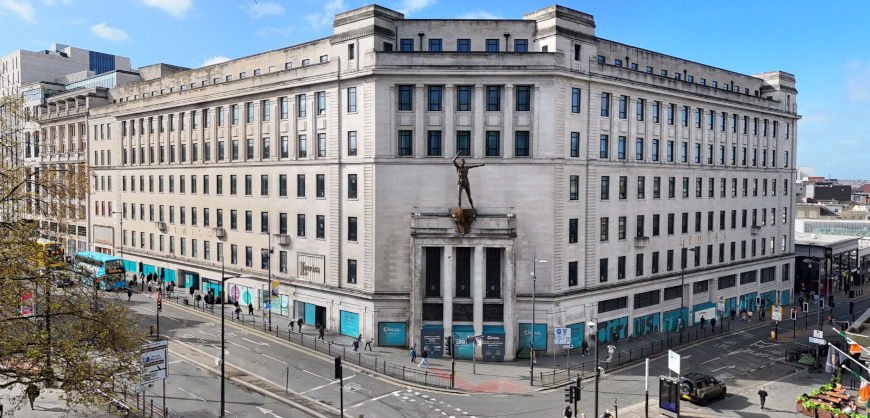
Liverpool is renowned for its historic and often iconic buildings, with a rich architectural identity. The perfect example of this is the city’s Lewis’s building, which has just been placed on the market.
The Grade II-listed structure covers 320,195 sq ft in the city centre and opened in 1856. It was one of England’s first department stores and remained a key shopping location until it’s closure in 2010. Since then, the building has been partially redeveloped and adapted for a range of functions, with current tenants including a 126-bedroom aparthotel, as well as office facilities, and gym space.
The location of the structure is a key consideration too, because as the building is ‘positioned at the intersection of Liverpool’s thriving retail, office, and innovation districts, the site benefits from significant planning potential across residential, leisure, commercial, and cultural sectors.’
Key areas of interest around the building include the brand new Knowledge Quarter, the Ropewalks area, and both the University of Liverpool and Liverpool John Moores University campuses. The sale of this building would also play into the overarching £5 billion expansion of Liverpool Central Station, which is positioned directly behind the Lewis’s building. This means that the building could have vast potential from its existing hospitality or office space to pivoting into retail, education, or residential purposes.
The sale of the building is being overseen by global commercial real estate advisors, Avison Young. The sale of such a large-scale structure in the city means exciting things for both property jobs in Liverpool and architecture jobs in Liverpool, as well as holding potential for the local economy as well.
Principal, Capital Markets at Avison Young, David Winterbottom, highlights how ‘the Lewis’s Building is an iconic cornerstone of Liverpool city centre, and we expect to see strong interest as this historic site comes to market. The property presents a truly unrivalled opportunity for mixed-use redevelopment, offering exceptional flexibility for a wide range of future uses.’
Winterbottom added that ‘Liverpool city centre had undergone a remarkable transformation in recent years, driven by significant inward investment, and this landmark asset is now poised to be reimagined for the next generation, reflecting the continued regeneration and growth we’re already seeing across the wider city region.’
The sale of such a large-scale building in the city could open exciting opportunities and give a new lease of life to this iconic Liverpool structure. It will be interesting to see who acquires the building and how it is repurposed as we move through the latter half of the year.